Skip to content
Legalization in Poland: A Complete Guide for Expats in 2026
From your first day of entry to a Polish passport — a comprehensive hub covering every stage of the legalization ladder.
What Does "Legalization" in Poland Actually Mean?
In the context of Polish immigration, legalization is the process of obtaining the legal right to reside and, in most cases, work in the country. It is not a single document but a series of steps that build on each other over time.
Step 1: Entry and Short-Term Stay
Citizens of many countries (USA, UK, Ukraine, Georgia and others) can enter Poland for up to 90 days within any 180-day period. Suitable for tourism or business meetings — not for working or long-term stay.
Issued by a Polish consulate abroad. Allows stay in Poland for up to 1 year. The standard entry point for workers and students. While on a Type D visa, start your TRC application well before it expires.
Step 2: Temporary Residence Permits (Karta Pobytu Czasowego)
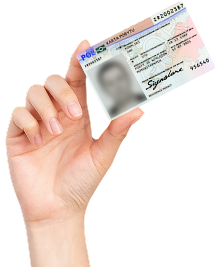
If you plan to stay in Poland for more than a year, you need a Temporary Residence Card (TRC) — Karta Pobytu. Usually issued for 1 to 3 years.
Standard TRC: tied to a specific employer and position — one card grants both stay and work rights.
EU Blue Card: for highly skilled professionals with a higher salary threshold. Offers easier family reunification and a faster path to long-term residency.
Students: enrolled in a stationary program can apply for a student TRC.
Graduates: after graduating from a Polish university, a special 1-year permit is available to look for a job. Once employed, transition to a work-based TRC without needing a separate work permit.
If your spouse is legally working in Poland or is a Polish citizen, you can apply based on "family reunification." Marriage to a Polish citizen usually grants full access to the labour market.
Entrepreneurs can legalize their stay by registering a Sp. z o.o. (limited liability company) or, for certain nationalities (e.g. Ukrainians under special laws), a JDG (sole trader). You must demonstrate sufficient profit or job creation.
Step 3: Permanent Residency Paths
After several years of living in Poland, you can apply for a permanent status — no more renewing permits every few years.
For those with special ties to Poland: holders of the Pole's Card (Karta Polaka), those with proven Polish roots (parents or grandparents), or spouses of Polish citizens after 3 years of marriage and 2 years on a TRC by marriage.
The standard path for most expats — available after 5 years of legal and continuous stay. Requires an official Polish language certificate at B1 level. Valid indefinitely (plastic card replaced every 5 years). Makes it easier to move to other EU countries.
Step 4: Obtaining Polish Citizenship
Usually available after living in Poland for 2 to 3 years on a Permanent Residence or EU Resident status (depending on grounds). Requirements: stable income, accommodation, and a B1 Polish language certificate.
The President of Poland can grant citizenship to any foreigner at their discretion, regardless of how long they have lived in the country. Rare — reserved for special merits.
Summary: The Legalization Ladder
| Goal | Primary Document | Duration | Work Access |
|---|---|---|---|
| Short visit | Visa-Free / Schengen Visa | Up to 90 days | No (usually) |
| Relocation | National Visa D / TRC | 1–3 years | Yes (if specified) |
| Permanent stay | EU Resident / Stały Pobyt | Permanent | Full access |
| Belonging | Citizenship | Lifetime | Full access |
Overstaying Your Visa: Risks and Consequences
Maintaining your legal status is your responsibility. An overstay occurs if you remain in Poland even one day after your visa, visa-free period, or TRC expires — without having submitted a new application.
A mandatory "return decision" requiring voluntary departure from Poland.
Deportation and a ban on entering the Schengen zone from 6 months to 5 years.
An overstay record significantly complicates obtaining future visas or permits anywhere in the EU.
Frequently Asked Questions (FAQ)
While not mandatory, the process involves complex paperwork in Polish. Mistakes can lead to months of delays or rejections. Professional services like Migrantexpert can manage your entire application, handle communication with the Urząd Wojewódzki, and ensure you meet all deadlines.
Yes. For example, if you are in Poland on a student TRC but find a full-time job, you can apply for a work-based TRC while still in the country. You do not need to return to your home country to "switch" your status.
A PESEL is your tax and social ID in Poland. It is essential for receiving medical care, paying taxes, and is now a mandatory requirement for almost all TRC applications in 2026.