Skip to content

Wrocław · legalization for foreigners

Legalization in Wrocław: residence card, permanent residence and citizenship
Updated for 2026
All legalization matters in Wrocław are handled by a single office – the Dolnośląski Urząd Wojewódzki (DUW), the Lower Silesian voivodeship office; specifically its Wydział Spraw Obywatelskich i Cudzoziemców, address: pl. Powstańców Warszawy 1, 50-153 Wrocław. The voivode (wojewoda) decides on the residence card, permanent residence (pobyt stały), EU resident status and part of the citizenship cases.
Since 27 April 2026 the way you apply in Wrocław has changed: residence (pobyt) applications are filed only online through the MOS 2.0 portal, and you come to the office only for one scheduled visit – to give fingerprints and show the originals of the documents attached to your application (wniosek). For the main grounds, DUW no longer accepts paper applications – paper filing remains only for a few specific purposes. This speeds up the start but adds technical steps where mistakes are easy.
MigrantExpert works locally in Wrocław: our office is at Kuźnicza 10, in the city centre. We handle cases across all areas – temporary and permanent residence, EU resident, citizenship, expediting and appeals – and we know the specific practice of the Lower Silesian office. At the consultation we look at your situation and tell you which route fits.
Office at Kuźnicza 10 · 4.9 rating on Google from more than 1400 reviews · we handle DUW cases from document preparation to the decision. We work in English and several other languages.
Where to start your legalization in Wrocław
Legalization means having a valid ground (podstawa) that gives you the right to stay in Poland. The ground depends on your situation: work, study, marriage or family, business, Polish origin. Each ground has its own type of permit and its own set of documents.
In Wrocław these cases are handled by the Dolnośląski Urząd Wojewódzki (DUW), and the decision is made by the Lower Silesian voivode. The path of your status is usually the same: first a temporary residence permit on a specific ground, then – once you have built up several years of legal residence – pobyt stały or EU resident status, and only after that, as a separate stage, citizenship. You cannot skip a step, but each step has exceptions and shorter routes, so it is worth planning the path in advance.
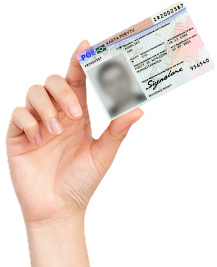
If you are still deciding on the ground, start by understanding what a residence card (karta pobytu) in Poland is. Below – how exactly it works in Wrocław, step by step.
| Type | Who it is for | Card validity | Where it leads |
|---|---|---|---|
| Temporary residence card | temporary ground: work, study, family | up to 3 years | pobyt stały or EU resident |
| Permanent residence card | family ties to Poland, Polish origin, refugees | plastic replaced every 10 years, status indefinite | citizenship |
| EU long-term resident | 5 years of legal residence, economic ground | plastic every 5 years, status indefinite | mobility in the EU, citizenship |
| Citizenship | highest stage | – | Polish passport |
Where it is processed: DUW and the MOS 2.0 portal

In Wrocław residence applications are received by the Wydział Spraw Obywatelskich i Cudzoziemców of DUW (address: pl. Powstańców Warszawy 1, 50-153 Wrocław). Invitations (zaproszenie) are registered here too, and finished cards are issued here.
The procedure since 27 April 2026 works like this. An application for temporary residence, pobyt stały or EU resident status is filed only online through the new version of the MOS portal (Moduł Obsługi Spraw) at mos.cudzoziemcy.gov.pl. You log in with login.gov.pl and sign the application with Profil Zaufany (a free electronic signature) or a qualified electronic signature. Even if you had an account in the old MOS, you need to create a new one: the previous version is switched off and old data has not been transferred. You sign the application yourself; a helper may only assist with filling it in.
After you file, the office assigns your visit. Your visit number is stated in advance in the fingerprint appointment letter (wezwanie) and shown on the electronic board at the office – you do not need to take a separate ticket from the biletomat. At the visit you give fingerprints and show the originals. Paper applications sent after 26 April 2026 are left unprocessed by DUW – the postal date does not count. Since 2026 the main channel for correspondence with the office is the electronic delivery address (eDoręczenia) and your MOS account, so check them regularly and file your application early – not in the last days of your status.
Not everything moved online. Some cases are still filed on paper – for example, family reunification and cases of a family member of a citizen of Poland, the EU or the UK when the foreigner is outside Poland, as well as intra-company transfer (ICT). A separate procedure – the application to issue or replace the card itself – does not go through MOS.
For employers there is one more detail: for a temporary residence and work application, the company must fill in and sign załącznik nr 1 electronically. If a university admits foreign students, from the same date it electronically signs the attachments to study-based applications.
Official DUW information and case preparation are at przybysz.duw.pl; up-to-date service cards and forms for foreigners are on the official DUW page on gov.pl.
Temporary residence card in Wrocław

A temporary residence card (zezwolenie na pobyt czasowy) is granted on a temporary ground, for up to three years. In Wrocław it is the most common first step of legalization. The ground determines which documents you submit and what the voivode checks. Below – four typical routes. A general walkthrough of the procedure is on the temporary residence page.
Based on work
Here you should tell two documents apart: the residence card (your residence status, decided by the voivode at DUW) and the work permit (a document from the employer). Since 1 January 2026 there are no longer work permits of type A, B, C, D, E on praca.gov.pl. They have been replaced by applications with new names:
- ZC-WWZPP – a work permit for a Polish employer (former type A).
- ZC-WWZF – a permit for performing a specified function in the bodies of a legal entity (former type B).
- ZC-WWZD – a permit for the posting (delegowanie) of a foreigner to Poland by a foreign entity (former types C, D, E).
Legal basis – Ustawa z dnia 20 marca 2025 r. (the new names are listed officially on zielonalinia.gov.pl). The ZC-WWZPP work permit in Wrocław is issued by the Lower Silesian voivode; the oświadczenie o powierzeniu pracy is arranged at the powiat urząd pracy. If you change employer while already holding a card, there are separate deadlines to notify the office – do not put it off.
Based on study
Full-time students apply for temporary residence based on study. Key documents – enrolment or a certificate from the university, proof of tuition payment, health insurance and sufficient funds. Since 27 April 2026 a university that admits foreigners signs the attachments to such applications electronically, so ask the dean’s office in advance who handles this. After you finish your studies, the status is not extended automatically – you need to move to another ground in time.
Based on family reunification
The spouse and minor children of a foreigner living legally in Poland can obtain temporary residence through family reunification. The authenticity of the marriage, living together and financial means are checked. Note one filing exception: if the family member is abroad at the time of filing, in Wrocław the case does not go through MOS but is filed on paper.
Blue Card
The Niebieska Karta UE (Blue Card) is temporary residence for highly qualified specialists with an employment contract whose salary is not below the set threshold. It gives a stronger position than an ordinary work card and an easier route to EU resident status. The salary threshold changes, so check it at the time of filing.
This page applies to citizens of any non-EU country. People who search in English come from many regions – India, Nigeria, the Philippines, the United States and others – and the residence procedure in Wrocław is the same for all third-country nationals. The usual grounds are work, study, business, family, the Blue Card for highly qualified specialists, and a residence permit not tied to a single employer for people with stable income from abroad (for example, remote work).
How you legalize your documents depends on your country. Documents issued abroad (birth or marriage certificates, diplomas) usually need an Apostille if your country is a party to the Hague Convention, or consular legalization if it is not – plus a sworn translation (tłumacz przysięgły) into Polish. If you entered Poland on a national visa (D), file your karta pobytu application before the visa expires, so you do not fall out of legal status.
A few points depend on where you are from:
- EU/EEA and Swiss citizens (including Ireland and Malta) do not need a karta pobytu – they register as EU citizens, which is a simpler, separate process.
- UK citizens: since Brexit, British nationals are treated as third-country nationals and need a residence permit, unless they are covered by the Withdrawal Agreement as residents from before 2021.
- Ukrainian nationals have a separate route – temporary protection and the CUKR residence card.
- Belarusian citizens may use a simplified humanitarian-stay procedure (humanitarian visa D21).
Permanent residence card in Wrocław

Pobyt stały (zezwolenie na pobyt stały) is an indefinite status; only the plastic card is replaced every ten years. This permit goes mainly to foreigners who have proven their Polish origin or their tie to Poland: Polish roots, marriage to a Polish citizen, Karta Polaka, as well as children and some categories such as refugees. Unlike EU resident status – where the main thing is the length of legal residence – for pobyt stały what matters is the ground (origin or tie to Poland), not the number of years.
In Wrocław the application follows the general MOS 2.0 procedure: online application, and a visit to DUW for fingerprints and originals. What the procedure involves and which documents to prepare are on the permanent residence card page.
EU long-term resident in Wrocław
EU long-term resident status (pobyt rezydenta długoterminowego UE) is also indefinite, but with a different logic. It is granted on an economic ground after at least five years of continuous legal residence in Poland. Not every period counts in full: for example, time spent studying on a student visa counts only by half. In addition, you confirm your knowledge of Polish. The resident card is valid for five years, after which the plastic is replaced, while the status stays indefinite.
The practical difference from pobyt stały: pobyt stały rests on your tie to Poland, while the EU resident is based on the length of legal residence and gives more mobility within the European Union. With resident status you can work in Poland without a separate work permit. More detail is on the long-term EU residence card page.
Polish citizenship in Wrocław
There are two different routes to Polish citizenship, and it is important not to mix them up.
The first – uznanie za obywatela polskiego, recognition as a citizen by the voivode’s decision. It is a route with clear conditions: usually at least three years of continuous residence on pobyt stały or EU resident status, stable income, legal title to housing and certified knowledge of Polish (usually a B1 certificate). For some categories the periods are shorter – for example, two years for spouses of Polish citizens with a marriage of at least three years. If the conditions are met, the voivode must issue a positive decision; if refused, there is a right of appeal. Conditions and forms are on the official DUW page (uznanie za obywatela).
The second route – nadanie obywatelstwa przez Prezydenta RP, the granting of citizenship by the President. It is a fully discretionary decision: no formal conditions, no processing deadline and no appeal. The procedure for filing through the voivode is on the DUW page (nadanie obywatelstwa).
One thing to keep in mind in 2026: the MSWiA (Ministry of the Interior) has announced plans to tighten the conditions for recognition as a citizen – in particular, extending the required residence period (options of up to 10 years are being discussed), introducing a state exam and a loyalty act. For now this is a draft, not a law in force, so cases are handled under the current, more lenient rules. If you are close to the required period, it is worth calculating the dates in advance.
Timelines, case status and appointments at DUW Wrocław
Exact processing times in Wrocław cannot be stated: they depend on the ground, on complete documentation and on the office workload, and officially a case can take months. Anyone who promises you a ‘guaranteed’ decision date is misleading you.
In practice it works like this. After the online filing in MOS 2.0, the office calls you in for the fingerprint visit itself – you do not book it separately, you come at the assigned time. You track the case in your MOS account and through the DUW information line for foreigners. Whether the card is ready for collection is checked at kartypobytu.duw.pl. While a correctly filed case is being processed, your stay in Poland is considered legal – from the filing date until the decision becomes final. The fee is paid online in MOS; the current amounts are on the relevant service pages.
If the process drags on beyond reason, there is a separate procedure – expediting the decision, that is, pressing the office to act within the set deadlines.
Refusal or delay: what to do

A refusal is not the end, but the next stage of the procedure. The steps depend on what happened.
- You received a refusal decision (decyzja). You have a limited period to appeal to the higher authority. The deadline is strict, so act as soon as you receive the decision.
- The case has stalled with no movement. Then the expediting procedure applies.
- A threat of removal has arisen. For this there is a separate track – cancellation of deportation.
In every case, exact deadlines and a correctly worded submission matter. A mistake in the appeal deadline is usually irreversible.
Why MigrantExpert in Wrocław
Our office is in Wrocław, at Kuźnicza 10, and we run cases precisely at the Lower Silesian office – we know its appointment system, the specifics of the visits and the switch to MOS 2.0. We determine the ground, check and gather the documents, fill in the application in MOS 2.0, handle the fingerprint visit and support the case at the stages included in the chosen service. What we do not do – we do not promise guaranteed approval or a specific decision date: that is beyond any firm’s control.
We work in English and several other languages, and we handle clients from Wrocław and the whole region. Our Google rating is 4.9 from more than 1400 reviews. You can get to know us on the team page.
We will look at your situation and suggest a legalization route in Wrocław. Come to the office at Kuźnicza 10 or contact us in whatever way suits you.
Frequently asked questions
Where do I apply for a residence card in Wrocław?
At the Wydział Spraw Obywatelskich i Cudzoziemców of DUW, address pl. Powstańców Warszawy 1, 50-153 Wrocław. Since 27 April 2026 the application itself is filed online in MOS 2.0 (mos.cudzoziemcy.gov.pl), and you come to the office for the fingerprint and originals visit.
How long does it take in Wrocław?
There is no single waiting time – it depends on the ground, complete documents and the DUW workload, and can be several months. While a correctly filed case is being processed, your stay stays legal.
How do I book a visit at DUW Wrocław?
You do not book the fingerprint visit separately: after filing in MOS 2.0, the office assigns the date and time itself. Your visit number is in the fingerprint appointment letter and shown on the electronic board – no need to take a ticket from the biletomat.
Can I come to the office without an appointment?
You can no longer file a residence application ‘in a live queue’ – filing is online. Service at the office runs by the assigned visit; general questions are handled through the information line for foreigners.
How do I check the case status on the DUW portals?
You can see progress in your MOS account and through the DUW information line. Whether the card is ready for collection is checked at kartypobytu.duw.pl.
What changed since 27 April 2026?
In Wrocław applications for temporary, permanent residence and EU resident status are filed only online in MOS 2.0. Paper applications sent after 26 April 2026 are not processed. The old portal is switched off, a new account is needed.
What are the work permits called now?
Since 1 January 2026, instead of types A, B, C, D, E, the applications ZC-WWZPP (former A), ZC-WWZF (former B) and ZC-WWZD (former C, D, E) apply.
Does MigrantExpert file the application for me in Wrocław?
Yes. We determine the ground, prepare the documents, fill in the application in MOS 2.0 and support the case at DUW at the stages included in the service. You sign the application in MOS yourself – it is a system requirement.
Not sure what your ground is or where to start? Book a consultation at the MigrantExpert office in Wrocław (Kuźnicza 10) – we will look at your situation and set out a plan.