Skip to content
Temporary Residence Permit in Poland (TRC): 2026 Guide
Types, documents, MOS 2.0 application process, Warsaw specifics, refusal appeals and everything you need for a successful application.
What Is a Temporary Residence Permit (TRC) in Poland?
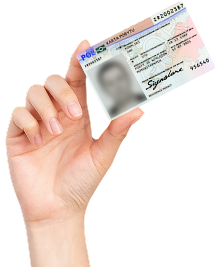
A TRC is a physical residence card issued by the Urząd Wojewódzki that grants a foreign national the legal right to reside in Poland for a defined period. Holding a valid TRC gives you the right to:
Reside in Poland legally for the duration stated on the card, with the possibility of renewal.
Work in Poland if your decision letter (decyzja) states labour market access.
Use the card as a travel document within the Schengen Area for short stays (up to 90 days in 180).
Count qualifying years toward EU Long-Term Residency after five years of legal stay.
Main Types of Polish Residence Card
The most common type — issued to foreign nationals employed by a Polish-registered employer. Tied to a specific employer and position as stated in the decyzja.
Issued to full-time students at accredited Polish universities (studia stacjonarne). Typically valid for the duration of the programme plus a short grace period.
For foreign nationals who own and actively run a registered business (JDG or Sp. z o.o.). Requires proof of genuine business activity and financial sufficiency.
For spouses, minor children and dependent family members of Polish citizens or TRC holders. Typically carries free labour market access (dostęp do rynku pracy).
Specialised work TRC for highly qualified workers earning at least 150% of the national average gross wage (~13,355.84 PLN brutto in 2026). Carries additional EU mobility rights.
Step-by-Step TRC Application Process in 2026
Complete the application form electronically at mos.cudzoziemcy.gov.pl. The form must be completed in Polish and signed with Profil Zaufany. If you are not confident in Polish, use a template or seek assistance — errors in the form are a common cause of Wezwanie letters requesting corrections.
- ☑ Digital photo — JPEG/JPG, 684×893 px, max 2.5 MB, taken within last 6 months
- ☑ Valid passport — copies of ALL pages
- ☑ Stamp duty: 440 PLN (work) or 340 PLN (all other) + 100 PLN card printing
- ☑ Health insurance: ZUS registration or private policy min. 30,000 EUR
- ☑ Proof of accommodation: rental agreement, ownership document, or landlord declaration
Add purpose-specific documents: employment contract + employer email (work) | university enrolment certificate + university email (study) | marriage/birth certificates (family reunification)
From 27 April 2026, all applications must be submitted exclusively online via MOS 2.0. Post or in-person submission is no longer accepted. After your employer or university signs Annex Nr 1, you receive a PDF confirmation that your case has been submitted — this is proof of your applied TRC process and serves as confirmation of legal stay.
After submission is registered, the Urząd Wojewódzki will send an official letter (Wezwanie) with the date and time for your fingerprints appointment — along with a list of documents to bring. The 60-day legal processing deadline begins only after biometrics are complete and all documentation is fully in order.
Monitor your case through your regional portal (inPOL in Warsaw, or the relevant voivodeship tracker). All official communication arrives by post — check your physical post box regularly. After a positive decision, the physical card is produced and you collect it in person at the Urząd.
TRC in Warsaw: Navigating the Mazowieckie Office
Warsaw falls under the Mazowieckie Urząd Wojewódzki — which processes more TRC applications than any other office in Poland.
Warsaw uses inPOL for case tracking. After biometrics, you receive login credentials to monitor status, Wezwanie requests, and the final decision.
Realistic waiting times in 2026: 8 to 15 months for standard work-based applications. Plan renewals accordingly — do not rely on having your card by any specific near-term date.
All official communication arrives by post to your registered address. Check your physical post box regularly throughout the entire processing period.
Residence Permit Refusal: What to Do Next?
Receiving a negative decision (decyzja negatywna) is not the end of the road. The most common reasons for refusal:
Missing Załącznik nr 1, expired insurance, or inadequate income proof.
Failure to meet the minimum salary requirement for the permit type.
Issues with the employer's legal registration status at the time of application.
Non-compliance with conditions of a previous permit (e.g. the 15/30-day job-change rule) or issues in mandatory background checks.
Frequently Asked Questions (FAQ)
Official state fees: 440 PLN for work-based applications, 340 PLN for all other types (study, family, business). An additional 50–100 PLN for physical card production. All fees are paid at the start of the legalization process. Immigration agency or legal representative fees are separate and vary by provider.
A valid Polish TRC allows travel within the Schengen Area for short stays — up to 90 days in any 180-day period — without a separate visa, provided your passport is valid.
Two key limitations: (1) the TRC does not grant the right to reside or work in other EU/Schengen countries — it is a Polish national document; (2) travelling outside Poland while your renewal is pending carries risk. The PDF confirmation legalises stay in Poland only — it does not function as a re-entry visa. If your nationality requires a visa and your previous visa has expired, you may be unable to return from abroad. Always check your specific situation before travelling while an application is in progress.