Skip to content
Having a Baby in Poland: A Legal Guide for Expat Parents (2026)
From the maternity ward to the first residence permit — every legal step, deadline and benefit explained for foreign nationals.
- ☑ Within 21 days: register birth at USC, obtain akt urodzenia
- ☑ Within 7 days of birth: employer submits ZUS ZCNA form for child health insurance
- ☑ As soon as possible: apply for baby's first Karta pobytu (family reunification)
- ☑ As soon as possible: register birth at your home country's consulate + apply for passport
- ☑ Within 12 months: apply for Becikowe one-off birth grant
- ☑ Ongoing from birth: apply for 800+ through ZUS portal once PESEL is confirmed
Step 1: Register the Birth at the USC (Within 21 Days)
The most time-sensitive task after your baby is born is registering the birth with the Urząd Stanu Cywilnego (USC) — the Civil Registry Office. In Poland, this must be done within 21 days of the birth.
Visit the USC with jurisdiction over the district where the birth took place. Bring:
- ☑ Valid passports of both parents — originals
- ☑ Marriage certificate — original + sworn Polish translation (tłumacz przysięgły) if issued in a foreign language
- ☑ Hospital birth notification form (karta urodzenia) — provided by the hospital
- ☑ If parents are unmarried: documentation acknowledging paternity (uznanie ojcostwa) — ask the USC in advance
At the USC you will confirm the child's full name (imię/imiona), register both parents' details, and receive the akt urodzenia — the foundational document for all subsequent steps. It is issued free of charge.
Step 2: PESEL and Health Insurance
The USC will typically assign a PESEL number to your baby automatically as part of the registration. Confirm this before you leave and receive the PESEL confirmation document alongside the akt urodzenia. Without a PESEL, the child cannot be registered with the health system or formally identified in any administrative process.
Registering the Baby for ZUS/NFZ Health Insurance
Your employer submits a ZUS ZCNA form on your behalf within 7 days of birth, adding the child as a family member (członek rodziny). The child's PESEL is required. Once registered, the child receives full NFZ coverage linked to your ZUS record.
You will need to arrange voluntary NFZ insurance or ensure coverage through a private health policy. Consult your regional NFZ office for the correct procedure based on your employment situation.
Step 3: Does My Baby Get Polish Citizenship?
The child acquires Polish citizenship at birth, regardless of where the birth takes place.
The child acquires the citizenship of the parents. A child born in Poland to two non-Polish parents is not Polish and will need their stay legalised through a residence permit.
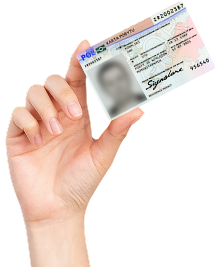
Step 4: Applying for the Baby's First TRC (Karta Pobytu)
A baby born in Poland to non-Polish parents does not automatically have the right to stay. Their legal presence must be formalised through a Temporary Residence Card (Karta pobytu) on the basis of family reunification (łączenie rodzin). Initiate this application as soon as the akt urodzenia and PESEL are in hand.
- ☑ Completed application form (wniosek) — signed by both parents or legal guardian
- ☑ Akt urodzenia — Polish birth certificate, original and copies
- ☑ Passports of both parents — copies + originals for inspection
- ☑ Passport of the child — all pages
- ☑ Valid TRC cards of both parents — copies + originals
- ☑ 1 digital photo of the baby — white background, face visible (many photo studios offer newborn passport photo services)
- ☑ Proof of shared accommodation (rental agreement)
- ☑ Stamp duty fee — 340 PLN
Step 5: Consular Registration and Baby's Home-Country Passport
Once you have the Polish akt urodzenia, register your baby's birth with your home country's embassy or consulate in Poland and apply for the child's first passport.
Contact your national embassy or consulate in Poland (Warsaw, Kraków, Wrocław, or Gdańsk, depending on your nationality). Waiting times can be long — book early.
Akt urodzenia (possibly with a sworn translation into your home country's language — check with the consulate), both parents' passports, and any marriage certificate.
Fill in the consulate's birth registration and passport application forms, pay the consular fee, and await the passport. The child's home-country passport will also be used as the identity document in the TRC application.
Financial Support for Parents
800 PLN per month per child, from birth, no income test. Available to foreign nationals residing legally in Poland whose Karta pobytu includes dostęp do rynku pracy (labour market access). Apply via the ZUS portal (PUE ZUS) using the child's and your PESEL numbers.
1,000 PLN one-off payment per newborn, subject to an income threshold (verify the current limit for 2026). Apply at the local social welfare office (Ośrodek Pomocy Społecznej — OPS) or online, within 12 months of the birth.
Supplementary monthly benefit for children aged 12 to 35 months. Eligibility for foreigners mirrors the 800+ rules — legal residence with labour market access required.
Frequently Asked Questions (FAQ)
Poland applies naming rules at USC registration. The name must be a recognised given name (imię) — not a surname, nickname, or offensive term — and must be of identifiable gender. No more than two first names can be registered officially. Names from other languages and cultures are generally accepted provided they can be transcribed into the Latin alphabet. If the USC clerk considers a name unusual, they may refer the decision to the USC director. In practice, most international names are accepted without issue.
Registration can still be completed after the deadline, but the right to choose the child's name may be restricted — under Polish civil registry law, if the deadline passes without parental registration, the USC director may assign a name from a standard list. In practice, USC offices work sympathetically on late registrations, especially for medical complications or administrative confusion. Go to the USC as soon as possible with all required documents and explain the circumstances.
Поделиться этой страницей