Skip to content
Long-Term EU Residence Card in Poland: Requirements in 2026
The most stable residence status available to non-EU nationals in Poland — 5-year rule, B1 certificate, income requirements, fees and how it compares to Karta Stałego Pobytu.
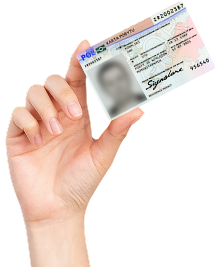
What Is a Long-Term EU Residence Card?
Unlike a Temporary Residence Card (TRC) which must be renewed every 1–3 years and is tied to a specific purpose, the Long-Term EU Residence Card is issued indefinitely. The physical card is replaced every 5 years as a technical requirement, but the underlying status does not expire.
Right to reside in Poland permanently — no periodic renewals of status based on employment or life circumstances.
Work for any employer, change jobs freely, or run a business — without notifying the Urząd Wojewódzki.
Limited rights to reside and work in other EU member states for periods exceeding 90 days, under the EU Long-Term Residents Directive.
A significantly strengthened position as a foundation for future Polish citizenship applications — the closest thing to full settlement before naturalisation.
Key Requirement 1: The 5-Year Continuous Stay Rule
The foundation of the application is a documented 5 years of legal, continuous residence in Poland immediately before your application date.
Absence limits (continuity rules)
| Rule | Standard TRC holders | EU Blue Card holders (within EU) | EU Blue Card holders (outside EU) |
|---|---|---|---|
| Single trip limit | 6 months max | 12 months max | 6 months max |
| Total over 5 years | 10 months max | 18 months max | 10 months max |
If part of your 5-year period was on a student TRC, only half of that time counts. Three years of study = 1.5 qualifying years. Always calculate effective qualifying years, not calendar years in Poland.
Waiting periods covered by the pieczątka count toward the 5 years only if the application ultimately resulted in a positive decision. A period ending in refusal is excluded retroactively.
Qualifying periods in other EU member states may be partially aggregated, provided the final 2 years before application were spent in Poland on a Polish EU Blue Card.
Valid TRC, national visa (D-type), or red stamp covering a pending positive application. Tourist visas, Schengen short-stay periods, and overstays do not count.
Key Requirement 2: B1 Polish Language Certificate
Every applicant must demonstrate Polish language proficiency at a minimum of B1 level (CEFR). Accepted proof in 2026:
- Official certificate from the State Commission for Certification of Proficiency in Polish as a Foreign Language — B1 or higher
- Polish university degree diploma (full-time studies conducted in Polish)
- English-language B1 certificates (Cambridge, IELTS, etc.) — must confirm Polish specifically
- Private school certificates without state accreditation
- Any informal or non-governmental language proof
Key Requirement 3: Stable and Regular Income (Last 3 Years)
You must demonstrate stable and regular income sufficient to support yourself and any dependants for the last 3 years before your application date. A strong recent salary cannot compensate for lean years before it — the Urząd reviews the entire 3-year period.
- ☑ Employment contracts and employer confirmation letters covering the last 3 years
- ☑ Annual PIT tax declarations filed with the Polish tax authority
- ☑ Bank statements showing regular salary deposits
- ☑ For self-employed: business registration, tax declarations, and ZUS contribution records
No single nationally published income threshold exists, but income consistently at or above the national minimum wage for a single-person household is generally sufficient. Tax payment gaps must not exceed 1 month.
Document Checklist
- ☑ Completed wniosek — submitted online via MOS 2.0
- ☑ 1 digital photo — 684×883 px, max 2.5 MB, taken within last 6 months
- ☑ Valid passport — original to present, copies of all pages including empty ones
- ☑ Documentation of the entire 5-year qualifying period — all TRCs, visa pages, stamp pages, no gaps
- ☑ Travel history records — dates, destinations, supporting evidence (boarding passes, bank statements)
- ☑ B1 Polish language certificate — original
- ☑ Income documentation for last 3 years — employment contracts, PIT declarations, employer statements, bank statements
- ☑ Proof of current accommodation — rental agreement or ownership document
- ☑ Health insurance confirmation — ZUS registration or private policy
- ☑ Stamp duty receipt — 640 PLN
- ☑ Card printing receipt — 100 PLN
All non-Polish documents must be translated by a Polish sworn translator (tłumacz przysięgły). Foreign notarial translations are not accepted.
Application Process and Processing Times
All applications are submitted exclusively online — no post or in-person filing. Pay the stamp duty of 640 PLN + 100 PLN card printing at the time of submission.
Attend your fingerprints appointment when scheduled by the office (Wezwanie letter). Bring all required documents specified in the letter.
Track your case via your regional portal (inPOL in Warsaw, regional platforms elsewhere). Check your physical post box regularly for any Wezwanie requesting additional materials. In Warsaw/Wrocław: expect 8–15 months. Smaller voivodeships: 4–8 months.
After a positive decision (decyzja pozytywna), collect the physical card in person. The card is replaced every 5 years as a technical update — no re-establishing of qualifying period or language/income requirements for replacement.
EU Residence Card vs. Karta Stałego Pobytu: Key Differences
| Criterion | Long-Term EU Residence Card | Karta Stałego Pobytu |
|---|---|---|
| Legal basis | EU Directive 2003/109/EC | Polish Act on Foreigners |
| Language requirement | B1 Polish certificate required | Not universally required |
| Card validity | Indefinite status, card replaced every 5 years | Indefinite status, card replaced every 10 years |
| EU mobility rights | Yes — right to reside in other EU states | No — Polish national document only |
| Labour market access | Full, unrestricted | Full, unrestricted |
| Best for | Internationally mobile professionals, future EU mobility | Spouses of Polish citizens, certain dedicated pathways |
Frequently Asked Questions (FAQ)
Yes. There is no requirement that your employment be continuous with a single employer. What matters is that your legal stay was uninterrupted (TRC or stamp always valid) and that your income documentation for the last 3 years demonstrates stable and regular earnings. Multiple employers, renewed contracts, and short gaps (maximum 1 month) between contracts are acceptable provided your income record is consistent.
The card can be revoked if you are absent from Poland for 12 consecutive months without prior authorisation, or if you establish principal residence in another EU member state. If you plan an extended absence, notify the Urząd Wojewódzki in advance and seek written confirmation of your status.
Holding the card is compatible with pursuing Polish citizenship, but it does not automatically lead to it. Polish citizenship by naturalisation requires a separate application — typically at least 3 years of continuous residence before application for those married to Polish citizens, or longer for other categories. The EU Long-Term Residence Card is a stable platform from which to pursue citizenship, but naturalisation is a distinct process.